Australian Building Approvals Heatmap
Map the pipeline for new houses, units and townhouses, then identify the local markets where concentrated supply may become an investment risk.
What is a building approval?
A building approval records permission for proposed construction. It shows what may enter the housing pipeline, not the number of homes already completed or available to occupy.
Permission is granted for a house or multi-dwelling project.
Finance, presales, labour and materials still need to align.
The dwelling reaches the market after construction.
Some approvals are delayed, redesigned or never built. Use approval counts as evidence of potential future supply, then confirm commencement and completion activity locally.
Australia can have a housing shortage and local oversupply at the same time.
Nationally, dwelling approvals and completions have struggled to keep pace with housing demand and policy targets. That broad shortage does not mean every suburb is short of every dwelling type.
Approvals cluster in particular growth corridors, station precincts and redevelopment sites. One suburb can receive thousands of approved houses while neighbouring established suburbs add very little. A single tower can also add hundreds of units within a small walkable catchment.
- National shortage: too few homes across the country relative to aggregate demand.
- Local oversupply: too much competing stock of a similar type in one market and period.
- Investment question: how much directly comparable stock may arrive near the property?
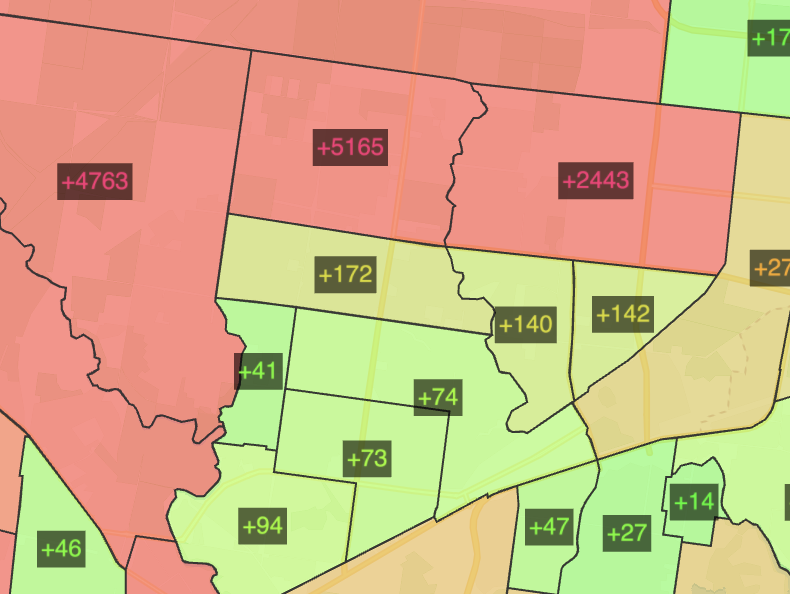
Victoria leads houses. New South Wales leads units.
Heatmaps processed 1,056,669 dwelling approvals from June 2020 to Q1 2026. The composition differs sharply by state, so “new supply” should always identify the dwelling type.
| State | Houses | Units | Townhouses | Total dwellings |
|---|---|---|---|---|
| VIC | 208,352 | 57,382 | 61,120 | 326,854 |
| NSW | 143,954 | 83,282 | 59,895 | 287,131 |
| QLD | 137,707 | 47,606 | 28,499 | 213,812 |
| WA | 95,493 | 11,083 | 6,144 | 112,720 |
| SA | 56,243 | 5,159 | 11,328 | 72,730 |
| ACT | 5,948 | 14,133 | 4,355 | 24,436 |
| TAS | 15,433 | 393 | 557 | 16,383 |
| NT | 2,250 | 95 | 258 | 2,603 |
| Total | 665,380 | 219,135 | 172,154 | 1,056,669 |
Publicly available building approvals data processed by Heatmaps, June 2020 to Q1 2026. Counts cover houses, flats/units and townhouses. Approvals are not completions.
Large greenfield corridors around Melbourne contribute to the country's biggest detached-house pipeline.
Sydney's apartment and transit-oriented development pipeline gives NSW the largest unit approval count.
14,133 of the ACT's 24,436 approvals are units, showing why totals alone can hide the local stock mix.
New supply can change the market for existing property.
A new tower does not need to change Australia's housing balance to affect one apartment owner. Hundreds of similar dwellings arriving together can alter buyer choice, rents, incentives and resale competition in that precinct.
One approval can represent hundreds of units
New towers may compete with nearby existing apartments on views, amenities, finishes and developer incentives. Investors should investigate the complete approved pipeline around the building, not just current listings.
Many similar homes can reach market together
Greenfield estates can release land in stages for years. Abundant new stock, builder packages and incentives may limit the scarcity of recently completed homes and create resale competition.
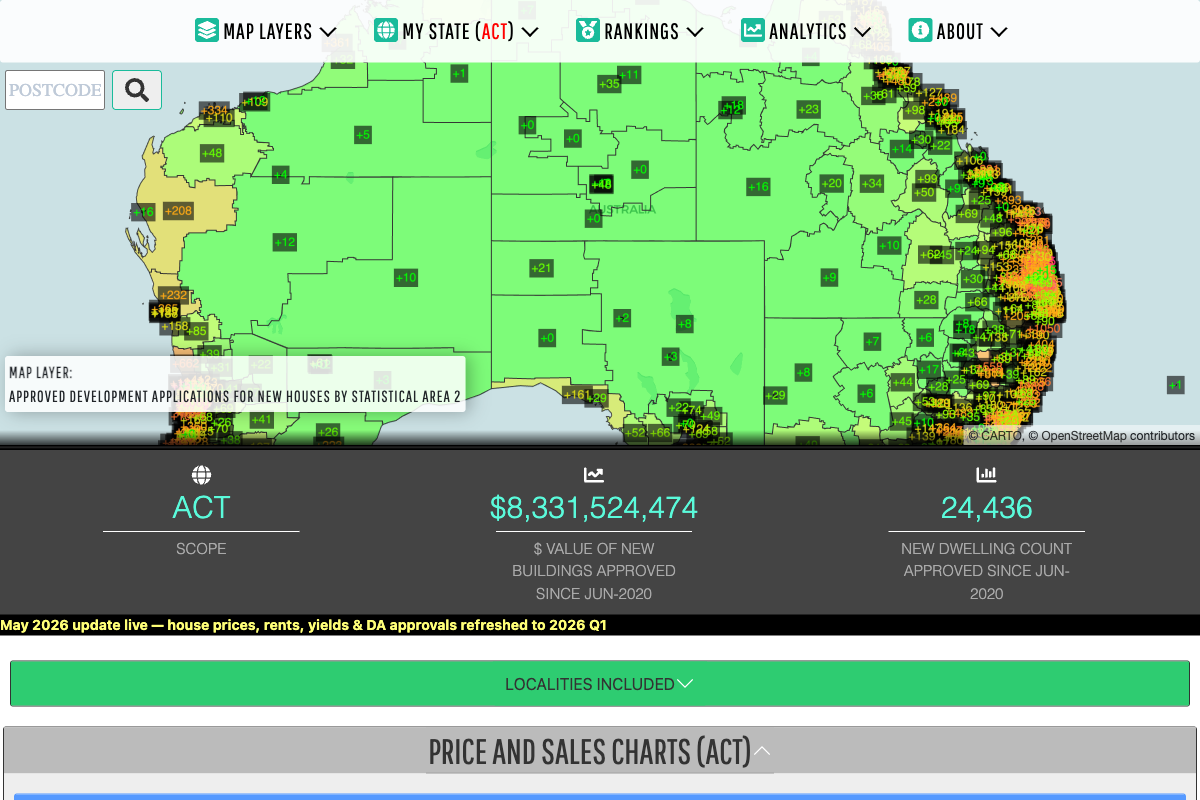
Match the approval type to the property you are considering.
A detached house should not be assessed only against apartment approvals, and an established unit should not be screened using the state house total. Start with the relevant layer, then compare the hotspot with its state pipeline.
For the source tables and processing approach, see Data & Methodology.
Questions to ask before buying in an approval hotspot.
Separate houses, units and townhouses, then narrow further by size, age, quality and price segment.
Check whether projects are approved only, under construction, staged or close to completion.
Population growth helps, but investigate employment, household formation, vacancy and buyer depth.
Developer rebates, guarantees and upgrades can make new stock compete aggressively with existing homes.
Roads, schools, transport and services can determine whether a growth corridor becomes more desirable or simply more congested.
Consider whether the property will remain differentiated when buyers can choose from many newer alternatives.
Building approvals FAQ
Are building approvals the same as homes built?
No. An approval grants permission to build. Some projects are delayed, changed or abandoned, while completed dwellings appear later in the construction pipeline.
Can Australia have both a housing shortage and oversupplied suburbs?
Yes. The national balance aggregates many different markets. Supply can be inadequate nationally while a particular suburb receives a concentrated wave of similar houses or apartments.
Why can a new apartment tower affect existing units?
A tower can add hundreds of alternatives within one precinct. New finishes, amenities and sales incentives may increase competition for tenants and future buyers of nearby established units.
Which states approve the most houses and units?
In the Heatmaps dataset covering June 2020 to Q1 2026, Victoria leads house approvals with 208,352 and NSW leads unit approvals with 83,282.
Investigate the supply pipeline before you buy.
Choose houses, units or townhouses, compare local approvals and inspect the areas where new stock is concentrated.